Florida hurricanes are among the most destructive forces a home can face, and your roof is often the first line of defense. High winds, heavy rain, and airborne debris all combine to create conditions that can severely impact asphalt shingle roofs. While some types of damage are obvious immediately after a storm, many problems develop gradually and may not become noticeable until weeks or even months later.
For homeowners, this creates a serious risk. A roof that appears intact from the ground may already be compromised, allowing water to enter slowly and cause hidden issues over time. Understanding how hurricanes affect your roof—and knowing exactly what to check after a storm—can help you take action early, avoid costly repairs, and extend the life of your roofing system.
Roof Riders works with Florida homeowners to identify storm-related roof damage, provide detailed inspections, and recommend the right solutions to keep homes protected year-round.
Quick Answer: How Hurricanes Damage Shingle Roofs
Hurricanes damage asphalt shingle roofs through three primary forces: wind, debris, and water. Each of these plays a different role in weakening your roofing system.
- Wind uplift can loosen shingles or break the adhesive seal that holds them in place
- Flying debris can strike the roof, causing cracks, dents, or punctures
- Heavy rain can enter beneath damaged or weakened areas, leading to moisture intrusion
Even if shingles remain in place after a storm, they may no longer provide full protection. This is why a professional inspection is often recommended after major weather events.
Why Hurricanes Are Especially Damaging in Florida
Florida’s location and climate make it particularly vulnerable to hurricanes and tropical storms. Unlike isolated weather events in other regions, Florida homes are exposed to recurring cycles of high winds, heavy rain, and humidity year-round.
During a hurricane, wind doesn’t simply blow across the roof; it creates pressure that pulls upward on shingles. At the same time, wind-driven rain can be forced into small openings that would normally remain sealed under standard conditions. This combination of uplift and water intrusion can damage multiple layers of the roofing system at once.
Additionally, Florida’s high humidity slows the drying process after a storm. Moisture that enters the roof structure may remain trapped longer, increasing the risk of mold growth, wood rot, and long-term deterioration.
4 Common Types of Hurricane Roof Damage
1. Wind Uplift and Loosened Shingles
One of the most common effects of hurricane-force winds is uplift. As wind moves rapidly across your roof, it creates suction that can lift the edges of shingles. This may happen repeatedly throughout the storm.
Even if shingles settle back into place afterward, the adhesive seal underneath may be weakened or completely broken. This makes the roof more vulnerable to future storms and increases the likelihood of water intrusion during heavy rain.
Over time, these weakened areas can develop into leaks or larger structural issues if not addressed.
2. Missing Shingles and Exposed Roof Areas
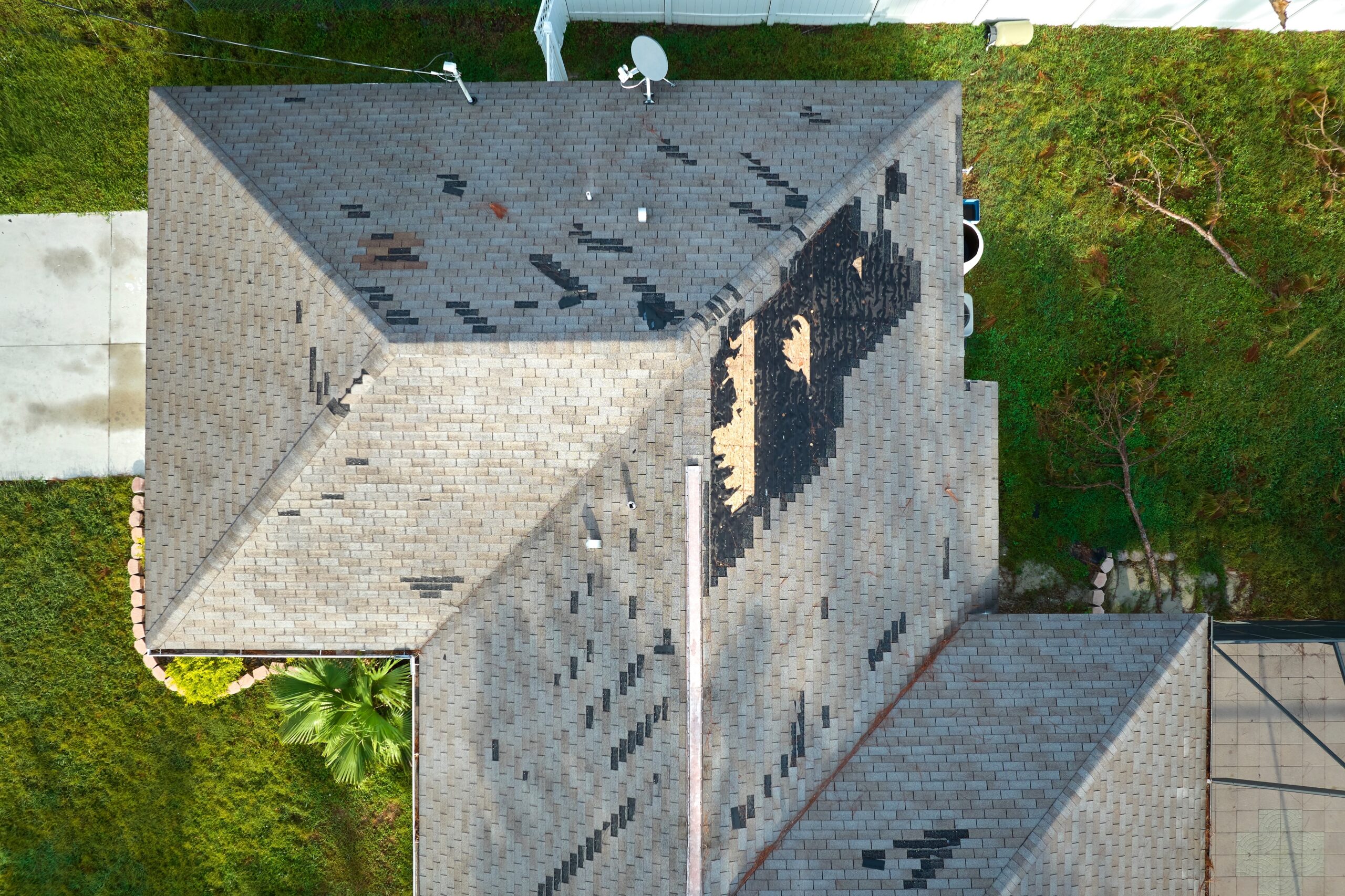
In stronger storms, shingles may be torn off entirely. This is often one of the most visible signs of hurricane damage.
When shingles are missing, the underlying roof deck is exposed to the elements. This allows water to enter immediately, which can quickly lead to interior damage. If left unrepaired, even a small exposed area can result in significant problems over time.
Prompt attention to missing shingles is essential to prevent further damage.
3. Impact Damage from Flying Debris
Hurricanes frequently generate airborne debris, including branches, roof tiles, and other materials. When these objects strike your roof, they can cause localized damage that may not be immediately obvious.
Impact damage can include:
- Cracked or fractured shingles
- Dented roofing surfaces
- Punctures that expose underlying layers
Even small areas of impact can weaken the roof’s overall integrity and create entry points for water.
4. Water Intrusion from Heavy Rain
Heavy rainfall is a major factor in hurricane-related roof damage. When shingles are lifted, cracked, or missing, water can easily find its way into the roofing system.
Once inside, moisture can spread through insulation, wood structures, and interior ceilings. This can lead to:
- Water stains on ceilings and walls
- Damp or damaged insulation
- Mold or mildew growth
- Structural weakening over time
Water intrusion is often the most costly type of damage because it can affect multiple areas of the home.
What to Check After a Hurricane
After a storm has passed and conditions are safe, homeowners should perform a basic inspection of their property. While it’s important to avoid climbing onto the roof, many warning signs can be identified from the ground or inside the home.
Look for the following:
- Missing, loose, or uneven shingles
- Debris or fallen branches on the roof
- Granules accumulating in gutters or downspouts
- Pieces of roofing material in your yard
- Water stains or discoloration on ceilings
- Damp insulation or musty odors in the attic
These signs can indicate that your roof has been affected and may require professional evaluation.
Why Some Roof Damage Isn’t Immediately Visible
Not all hurricane damage is obvious right away. In many cases, the most serious problems develop gradually.
Shingles that appear intact may have weakened seals, allowing small amounts of water to enter over time. These issues can go unnoticed until they lead to visible symptoms such as leaks or interior damage.
Hidden problems can result in:
- Slow, persistent leaks
- Rotting wood structures
- Mold growth inside walls or ceilings
- Reduced lifespan of the roof
Because of this, relying solely on a ground-level visual inspection may not be enough to fully assess your roof’s condition.
How Roof Age Affects Storm Damage
The age of your roof plays a significant role in how well it performs during a hurricane.
As shingles age, they lose flexibility and become more brittle. Adhesive seals may weaken, and protective granules can wear away. These changes reduce the roof’s ability to withstand wind and water.
Older roofs are more likely to experience:
- Shingle cracking or breakage
- Loss of adhesion
- Increased susceptibility to wind uplift
If your roof is more than 10–15 years old, it may be especially important to schedule an inspection after a storm.
How Roof Riders Helps After Hurricane Damage
Roof Riders provides comprehensive roof inspections designed to identify both visible and underlying storm damage.
Our inspection process includes:
- Evaluating shingle condition and wind-related issues
- Checking for signs of debris impact
- Inspecting flashing around vents and chimneys
- Assessing moisture intrusion risks
- Reviewing the overall structural condition of the roof
By identifying issues early, we help homeowners take the right steps to prevent more serious problems and extend their roof’s lifespan.
When to Schedule a Professional Inspection
You should consider scheduling a professional inspection if your home has experienced any of the following:
- Strong winds during a hurricane or tropical storm
- Prolonged or heavy rainfall
- Nearby fallen trees or debris
- Visible changes to your roof or interior
Even if you’re unsure whether damage occurred, a professional evaluation can provide clarity and peace of mind.
How to Reduce Future Hurricane Damage
While no roof can be completely immune to hurricane damage, homeowners can take steps to reduce risk.
These include:
- Scheduling regular roof inspections
- Repairing minor issues before they worsen
- Keeping gutters and drainage systems clear
- Trimming nearby trees and branches
- Using high-quality, wind-rated roofing materials
Preventative maintenance can make a significant difference in how your roof performs during future storms.
Hurricane Roof Damage FAQ
Can a hurricane damage my roof without removing shingles?
Yes. Strong winds can loosen shingles and weaken their seal without tearing them off.
How soon should I inspect my roof after a storm?
You should inspect your property as soon as it is safe and schedule a professional inspection within a few days.
What are the most common signs of damage?
Common signs include missing shingles, debris, granule loss, and interior water stains.
Should I repair roof damage immediately?
Yes. Addressing damage early helps prevent more serious and costly problems.
Protect Your Home After a Hurricane
Hurricanes are a part of life in Florida, but roof damage doesn’t have to turn into a major problem. By understanding how storms affect your roof and knowing what to look for, you can take action early and protect your home.If you believe your roof may have been affected by a recent storm, Roof Riders can provide a professional inspection and recommend the right solutions to keep your home safe and secure.